
-

5" "Forest" Midorigoi Butterfly Koi #J92948(P14)
This 5" Midorigoi koi offers a rare and eye-catching green coloration that stands out in any pond. Midorigoi are known for their distinctive olive-to-mossy tones, making them a unique addition...
-
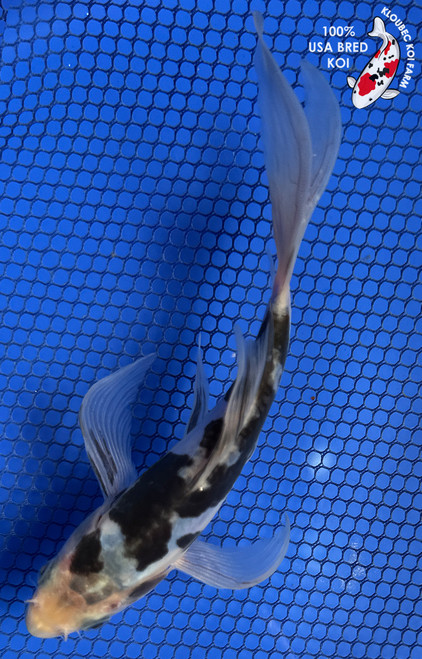
6.5" "Onyx" Kumonryu Butterfly Koi #J91840(X40)
This 6.5" Kumonryu Butterfly Koi combines dramatic black-and-white coloration with the elegant movement of long Butterfly fins. Deep black sumi flows irregularly across the head, shoulders and body,...
-
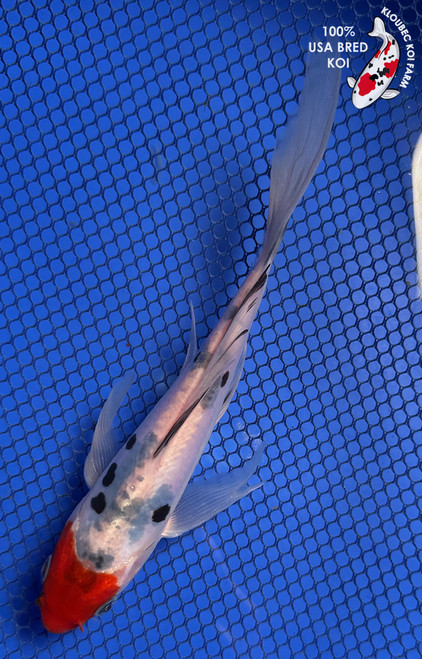


7" "Finn" Doitsu Sanke Butterfly Koi #J91839(X40)
This 7" Doitsu Sanke Butterfly Koi has a distinctive three-color pattern highlighted by a bold red head and scattered black sumi markings. The vivid red-orange coloration across the head immediately...
-
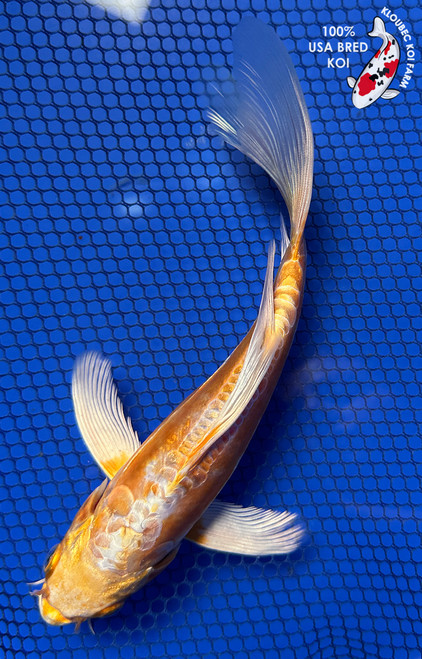
7.5" "Butterscotch" Doitsu Yamabuki Hariwake Butterfly Koi #J91833(X43)
This 7.5" Doitsu Yamabuki Hariwake Butterfly Koi has a warm, luminous appearance created by its combination of metallic golden-yellow coloration, platinum highlights and dramatic Doitsu scaling. One...
-

5.5" "Copper" Beni Kikokuryu Butterfly Koi #J91853(P12)
This 5.5" Beni Kikokuryu Butterfly Koi has an especially interesting combination of warm and cool tones, giving it a look that's quite different from a traditional red-and-black Beni Kikokuryu. Rich...
-
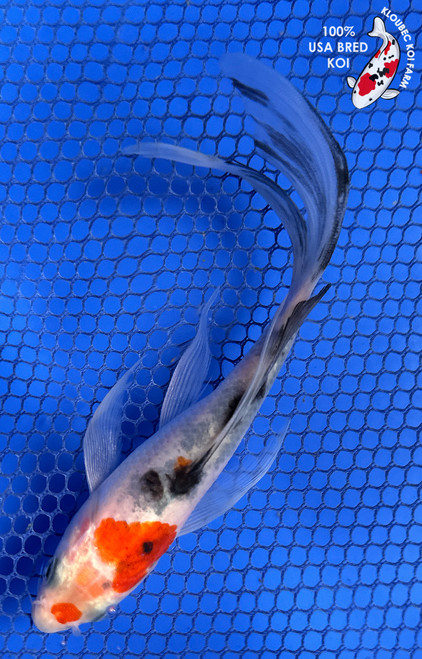
5.5" "Pebbles" Sanke Butterfly Koi #J91852(P12)
This 5.5" Sanke Butterfly Koi combines the classic three-color beauty of Sanke with the graceful movement of long Butterfly fins. Bright red-orange hi highlights the head and front of the body,...
-

6" "Daffodil" Yamabuki Ogon Butterfly Koi #J91849(P12)
This 6" Yamabuki Ogon Butterfly Koi brings together the brilliant golden coloration of Yamabuki Ogon with the graceful movement of long Butterfly fins. Yamabuki Ogon are known for their solid...
-

6" "Sienna" Kohaku Butterfly Koi #J91848(P12)
This 6" Kohaku Butterfly Koi offers a bold interpretation of the classic red-and-white Kohaku pattern, with rich red-orange hi covering much of the body. Rather than having large areas of white,...
-

6" "Ember" Beni Kikokuryu Butterfly Koi #J91844(P11)
This 6" Beni Kikokuryu Butterfly Koi features a striking metallic black (sumi) base layered with contrasting white (shiroji) and vibrant orange (beni) highlights. The dynamic pattern creates a bold,...
-

7" "Scout" Aka Shusui Butterfly Koi #J9126(F1)
This 7" Aka Shusui Butterfly Koi combines dramatic coloration with the graceful movement of long, flowing Butterfly fins. Rich orange-red coloration extends across t
-

6.5" "Cayenne" Benigoi Butterfly Koi #J9123(F3)
Bright, bold and easy to spot in the pond, this 6.5" Benigoi Butterfly Koi combines the simplicity of a solid-colored Benigoi with the graceful movement of long Butterfly fins. Benigoi are prized...
-
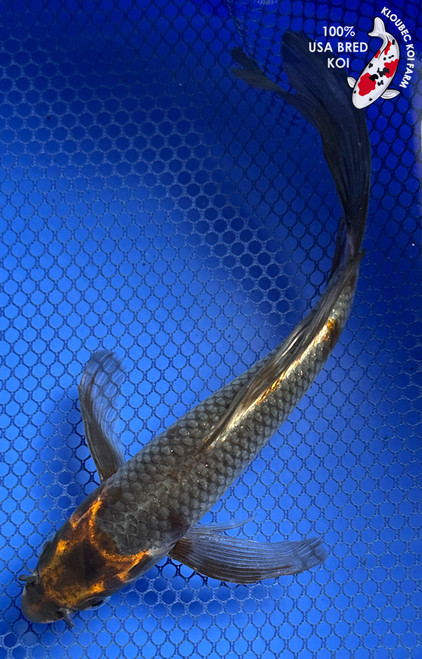


8" "Bear" Metallic Matsuba Butterfly Koi #J82627(X44)
This distinctive 8" Metallic Matsuba Butterfly Koi features a rich combination of dark charcoal coloration, metallic bronze-gold highlights, and beautifully defined Matsuba scaling. The d
Kloubec Koi Farm is a breeder of Butterfly koi as well as straight fin koi. All of our Butterfly parent stock are of Japanese lineage obtained from famous Japanese koi breeders Suda, Yamasan, and others. Butterfly koi fish are produced in many varieties including Sanke, Kohaku, Yamabuki Ogon, Showa, Kumonryu, Ochiba Shigure and more. We continuously strive to produce the best butterfly koi for sale with fins that are graceful and that are in accordance with the AKCA judging standards for Longfin koi.
Butterfly Koi are known for their elongated fins. Developed in the mid-21st century as a result of Japanese koi breeders’ efforts to improve the hardiness of traditional koi, they combined wild Indonesian Longfin river carp with their traditional koi. Not only was the outcome a hardier fish, it surprisingly featured longer fins and barbels, as well as exaggerated nostrils. Their decorative pompom nostrils are called narial bouquets.
Koi Fish FAQ
How big of a tank do butterfly koi need?
Butterfly koi are pond fish, and not easily adapted to aquarium habitats. However, if pristine water quality is maintained with filtration, some success may be achieved. When considering buying a butterfly koi for sale, it’s important to know how big of a tank you need. Butterfly Koi can quickly outgrow a small tank due to their rapid growth. A single koi fish could require 50 gallons or more of water. Butterfly Koi, on average, need anywhere between a 50 to 100-gallon tank for a fully grown koi, which is usually 10 inches or more, to live comfortably.
Do butterfly koi get as big as regular koi?
There are quite a few distinctions between butterfly koi and regular koi, but growth rate is not. Butterfly koi can grow as large as regular koi. One of the main differences between a butterfly koi and a regular koi is that the butterfly koi have long flowing fins and tail. The tail and fins continue to get longer as the butterfly koi gets older. With an extended tail length butterfly may appear larger than regular koi. Furthermore, the barbels (whiskers) around the mouths of butterfly koi are also much longer than those of regular koi.
Are butterfly koi even considered koi?
There has been much controversy about whether butterfly koi are even considered koi fish at all. Most of the large koi fish competitions excluded butterfly koi until the rules changed in 2015 and they were allowed to compete in an exclusive butterfly classification. Koi fish are believed to be descendants of the carp and are even considered a subspecies. Due to the lack of factual knowledge surrounding their ancestors, butterfly koi are widely accepted as koi fish.
What is the lifespan of a butterfly koi?
The average lifespan of a butterfly koi fish is anywhere between 25-30 years when cared for in proper conditions. This being, water quality, filtration, dietary requirements, oxygen, ammonia etc. that are directly related to a butterfly koi lifespan.
What fish can live with butterfly koi?
There are a variety of fish that are able to live with butterfly koi. These include koi, pond goldfish, barbels, barbs, catfish, golden orfe, tench, and pleco. These fish get along well together, and can live together in the same environment without issue.