
What Do Koi Fish Eat for Best Health?
Posted by Kloubec Koi Farm on 13th Dec 2024
If you’ve ever wondered what koi fish eat for best health, the answer goes far beyond tossing pellets into a pond. A balanced koi fish diet supports growth, color, digestion, and immune health — and feeding the wrong foods can do more harm than good.
At Kloubec Koi Farm, we’ve found that koi thrive when their diet is centered on high-quality koi pellets formulated specifically for long-term health. A proper koi diet provides balanced protein for growth, essential vitamins for immune support, and nutrients that enhance natural color. Supplemental foods like vegetables or natural pond forage can be offered occasionally, but feeding amounts and frequency should always be adjusted based on water temperature to avoid stress and digestive issues.
We raise koi year-round and feed carefully balanced diets designed to support long-term health and growth, and all of our koi are fed Platinum Koi Cuisine.
Koi fish thrive on a diverse diet that keeps them healthy and vibrant. The best food for koi fish contians high-quality pellets, the cornerstone of their nutrition, providing essential vitamins and minerals. Spirulina algae boosts growth and enhances their stunning colors, while wheat germ promotes circulation. For a protein punch, brine shrimp is a favorite, especially for young koi. These living jewels also enjoy organic treats like insects and aquatic plants. Seasonal adjustments are vital, with feeding habits changing as temperatures fluctuate. In warmer months, koi gobble up protein-rich meals, but when the mercury drops, their appetite wanes. Mastering the art of koi cuisine is a journey that'll make any pond owner a fish whisperer.
Staple Foods for Koi
A well-balanced diet is essential for maintaining the health and vibrancy of koi fish. When it comes to staple food types, high-quality pellets take center stage, providing a powerhouse of nutrients, vitamins, and minerals that keep these living jewels in top form.
But that's not all, folks – spirulina algae is the secret sauce that gives koi their superstar status, boosting growth, digestion, and those eye-popping colors we all love.
Let's not forget about wheat germ, the unsung hero of koi cuisine. Packed with natural vitamin E, it's like a circulation superhero, ensuring balanced growth from fin to tail.
Kloubec Platinum Koi Cuisine is your #1 source to provide the forementioned vital elements, all wrapped up in easy-to-feed floating pellets. In addition to all of that goodness, Kloubec Platinum Koi Cuisine was the first koi diet to contain Primalac, a probiotic for koi, that aids digestion and overall fish gut health.
And for the growing koi kids? Brine shrimp is the way to go, serving up a protein punch that'll have them swimming laps around the pond in no time.
Now, here's the scoop on feeding frequency: consistency is key. Establish a routine that works for you and your finned friends, but remember to keep an eye on those environmental conditions.
Mix it up with some organic treats like insects and aquatic plants, toss in some fresh fruit or vegetables, and you'll have a pool full of happy, healthy koi in no time.
Seasonal Feeding Considerations
Seasonal changes greatly impact koi feeding habits and nutritional requirements. As water temperatures fluctuate, so do the dietary needs of these colorful pond dwellers. It's a delicate dance of adaptation that koi owners must master to keep their finned friends healthy and thriving.
Springtime kicks off the annual koi feeding cycle. As water temperatures climb above 60°F, koi emerge from their winter slumber ready for a light meal. Start small and gradually increase portions as they shake off their hibernation hangover.
Summer brings peak activity and appetite. With water temps between 73°F and 86°F, koi are living their best lives and need high-protein diets to fuel growth and reproductive shenanigans. It's like a never-ending pool party for these guys!
Fall digestive adjustments prepare koi for the coming winter. As temperatures cool, switch to easily digestible foods that help them transition smoothly. When the mercury dips below 55°F, it's time to slow down feeding to once a day. Offer only small amounts of food during the warmest period of the day. This allows time for the koi’s digestive tract to move food along before a dip in evening temperatures.
Below 50°F? Time to say "see you next spring" to mealtime. Your koi will be chilling in their underwater igloo until the warmth returns.
Nutritional Supplements and Treats
While a balanced diet forms the foundation of koi health, nutritional supplements and treats play an essential role in enhancing their overall well-being. These additions to their regular meals offer a range of feeding benefits, from boosting immune systems to improving coloration and growth.
One standout supplement is spirulina, a nutrient-packed algae that works wonders for koi. It's like a superfood smoothie for fish, packed with vitamins and minerals that make their color intensify, skin shine, and their immune systems bulletproof.
Wheat germ is another stellar option, especially during warmer months. It's chock-full of vitamin E, which keeps their circulation humming and growth on track.
When it comes to treat variety, koi are in for a feast. Brine shrimp and bloodworms are like protein shakes for young koi, helping them bulk up and grow strong. Small pieces of fresh watermelon are always welcomed.
And for a real gourmet experience, fermented fruit treats like Manda Fu are the caviar of the koi world. These delicacies not only taste great but also give koi a vibrant glow and an extra pep in their swim.
Feeding Techniques and Schedules
Successful koi care hinges on proper feeding techniques and well-structured schedules. To keep these living jewels in tip-top shape, it's essential to nail down the right feeding frequency and master the art of portion control. Koi are like underwater foodies, and their feeding behavior can be a real treat to watch!
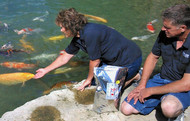
When it comes to mealtime, think "little and often." Aim for up to four feedings a day, each lasting about five to ten minutes. This approach keeps your finned friends satisfied without turning your pond into a buffet gone wrong.
But here's the kicker: water temperature is the ultimate boss. When it dips below 50°F, it's time for koi to fast. Once it climbs above 60°F, you can ease back into your regular feeding groove.
| Water Temperature | What to Feed Koi | Feeding Frequency |
|---|---|---|
| Below 50°F | Do not feed | — |
| 50–60°F | Platinum Koi Cuisine or Wheat germ food | 1x per day |
| 60–75°F | High-quality koi pellets / Platinum Koi Cuisine | 2–3x per day |
| 75°F+ | Growth or color food / Platinum Koi Cuisine | Small, frequent feedings |
Size matters, too! Match the food to your koi's mouth size for ideal digestion.
And remember, consistency is key. Stick to a schedule, and you'll soon have your koi doing the aquatic equivalent of Pavlov's dogs, excitedly anticipating your arrival. It's not just about keeping them fed; it's about building a bond with these underwater marvels.
Environmental Factors Affecting Diet
Maintaining excellent water quality is just as important as feeding a proper diet. Remember the environmental conditions play a significant role in shaping the dietary needs of koi fish. These graceful aquatic beauties are sensitive to changes in their surroundings, and savvy koi keepers know that adjusting their feeding routine is essential for maintaining ideal health.
Water temperature is a key factor in determining how much and what to feed your finned friends. When the mercury dips below 50°F, koi metabolism slows down, and they need less chow. It's like they're on a winter diet!
On the flip side, during those scorching summer days, they're ready to chow down on protein-packed meals to fuel their growth.
Oxygen levels can also throw a wrench in your feeding plans. After a storm or during a heatwave, when oxygen is low, it's best to skip a meal or two. Your koi won't mind - they're natural foragers and can snack on algae and insects in their pond.
This ability to find their own grub comes in handy when the ecosystem is thriving, reducing the need for supplemental feeding. Just remember, a clean pond is a happy pond, so keep that water quality in check!
Conclusion
Nurturing koi fish with a well-balanced diet is paramount for their health and beauty. As the old saying goes, "You are what you eat," and this rings especially true for these living jewels of the pond. By providing a diverse menu of staple foods, seasonal offerings, and nutritional supplements, caretakers can guarantee their koi thrive year-round. Proper feeding techniques and consideration of environmental factors further enhance the koi's well-being, resulting in vibrant colors, robust growth, and a strengthened immune system.
Understanding what koi fish eat — and when to feed them — is one of the most important steps in keeping koi healthy for years to come. With a high-quality diet, proper portions, and clean water, koi can thrive well into old age.
Frequently Asked Questions (FAQs)
1. What is the best staple food for koi fish?
Koi do best on a high-quality, balanced koi pellet diet formulated for their nutritional needs. These pellets provide essential proteins, fats, vitamins, and minerals for growth, color, and health.
2. How often should I feed my koi?
Feed koi small meals that they can finish in about 3–5 minutes, several times a day during active months. Avoid overfeeding, which can foul water and stress the fish.
3. Can koi eat vegetables or human foods?
Yes — many koi enjoy healthy supplements like peas, lettuce, and watermelon in moderation. However, foods high in carbohydrates or processed human foods should be avoided.
4. Should I change koi food with the seasons?
Yes — koi metabolism changes with temperature. In cooler weather, they digest food more slowly, so easily digestible or lower-protein foods are better until water warms up again.
5. What foods should I not feed my koi?
Avoid bread, cereals, processed snacks, and foods with high carbohydrates. These items offer little nutrition and can pollute pond water.
6. Do koi eat algae or natural foods in the pond?
Koi are omnivores and will graze on algae, aquatic plants, insects, and small organisms in the pond, which can be a healthy supplement to formulated diets.
7. Can I feed koi live or freeze-dried foods?
Yes — live foods like earthworms or freeze-dried shrimp can be offered occasionally for protein and enrichment, but they shouldn’t replace a balanced pellet diet.
8. How do I know if my koi are getting enough nutrition?
Healthy koi will show vibrant colors, steady growth, active behavior, and good body condition. Poor diet often results in dull color, slow growth, and lower immunity.
9. Can koi diet affect their color?
Absolutely — diets with natural color enhancers like spirulina and specific nutrients help koi express their best coloration.
10. Is the size of the pellet important?
Yes — pellet size should match koi mouth size. Smaller fish do better with smaller pellets, and larger koi can handle larger sizes for efficient feeding
Koi shopping made easy!
Healthy • American-bred • Shipped to your door
www.kloubeckoi.com/koi-for-sale